
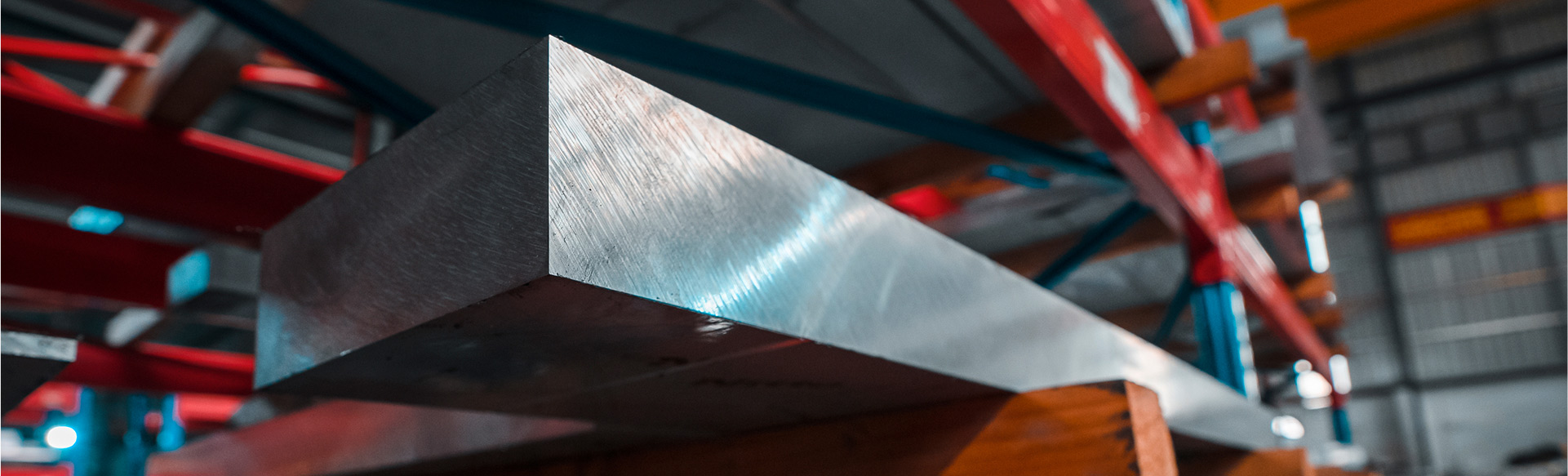
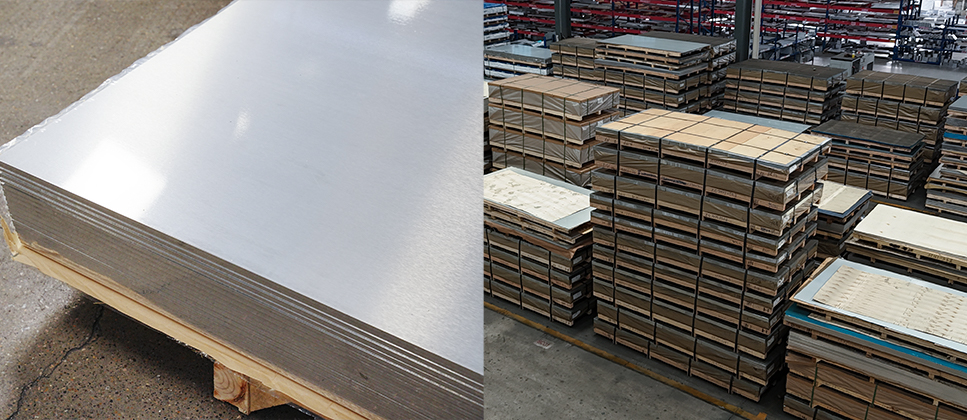
2A12 aluminum plate is a high-strength hard aluminum, belonging to the Al-Cu-Mg alloy, with excellent mechanical properties and good processing characteristics, and is widely used in aerospace, machinery manufacturing and other fields.
National standard (GB): 2A12, the old brand is LY12.
American Standard (AMS): corresponds to 2024 aluminum alloy.
Other standards: ISO standard is AlCu4Mg1 (ISO 209).
Main ingredients range (weight percentage):
Copper (Cu): 3.8~4.9%,
Magnesium (Mg): 1.2~1.8%,
Manganese (Mn): 0.3~0.9%,
Silicon (Si): ≤0.5%,
Iron (Fe): ≤0.5%,
Zinc (Zn): ≤0.3%
Other impurities: trace amount, total ≤0.15%.
Tensile strength (σb): ≥425 MPa (annealed) → 470 MPa (after age hardening).
Yield strength (σ0.2): ≥275 MPa.
Elongation (δ): ≥10% (when plate thickness ≤5mm).
Hardness: about 120 HB (aged state).
Density: 2.78 g/cm³.
Melting point: about 502~638℃.
Thermal conductivity: 121 W/(m·K).
Electrical conductivity: Approximately 30% IACS (International Annealed Copper Standard).
Thermal expansion coefficient: 23.2×10⁻⁶/℃ (20~100℃).
Solution treatment (quenching): heat to 495~505℃, water cooling.
Natural aging (T4): Place at room temperature for 4 to 6 days, and the strength will gradually increase.
Artificial aging (T6): Heat to 150~190℃ and keep warm for several hours (rarely used, may reduce toughness).
High strength: Higher than ordinary aluminum alloys (such as 6061), and close to steel.
Fatigue resistance: suitable for dynamically loaded parts such as aircraft skins and wing spars.
Processability: Can be cut, stamped, and riveted, but weldability is poor (easy to crack, requiring special processes).
Corrosion resistance: Generally, anodizing or coating protection (such as aluminum cladding) is required.
Aerospace: aircraft fuselage, wing structures, rocket fuel tanks.
Military industry: armored vehicle parts, missile components.
Mechanical manufacturing: high-load gears, hydraulic cylinders.
Transportation: racing car parts, ship structures (anti-corrosion treatment required).
